Delighted · 2013 to 2021
Designing a feedback loop people would trust
Delighted made it possible to start collecting meaningful customer feedback in minutes. Keeping it simple required strong defaults, disciplined product decisions, and equal care for the people sending and receiving surveys.
- Role
- Co-founder and Chief Design Officer
- Scope
- Product, brand, research, and company design
- Team
- Three founders, growing to roughly 20 to 30 people
- Outcome
- Acquired by Qualtrics in 2018
Origin
The feedback existed. It was not reaching the people building the product.
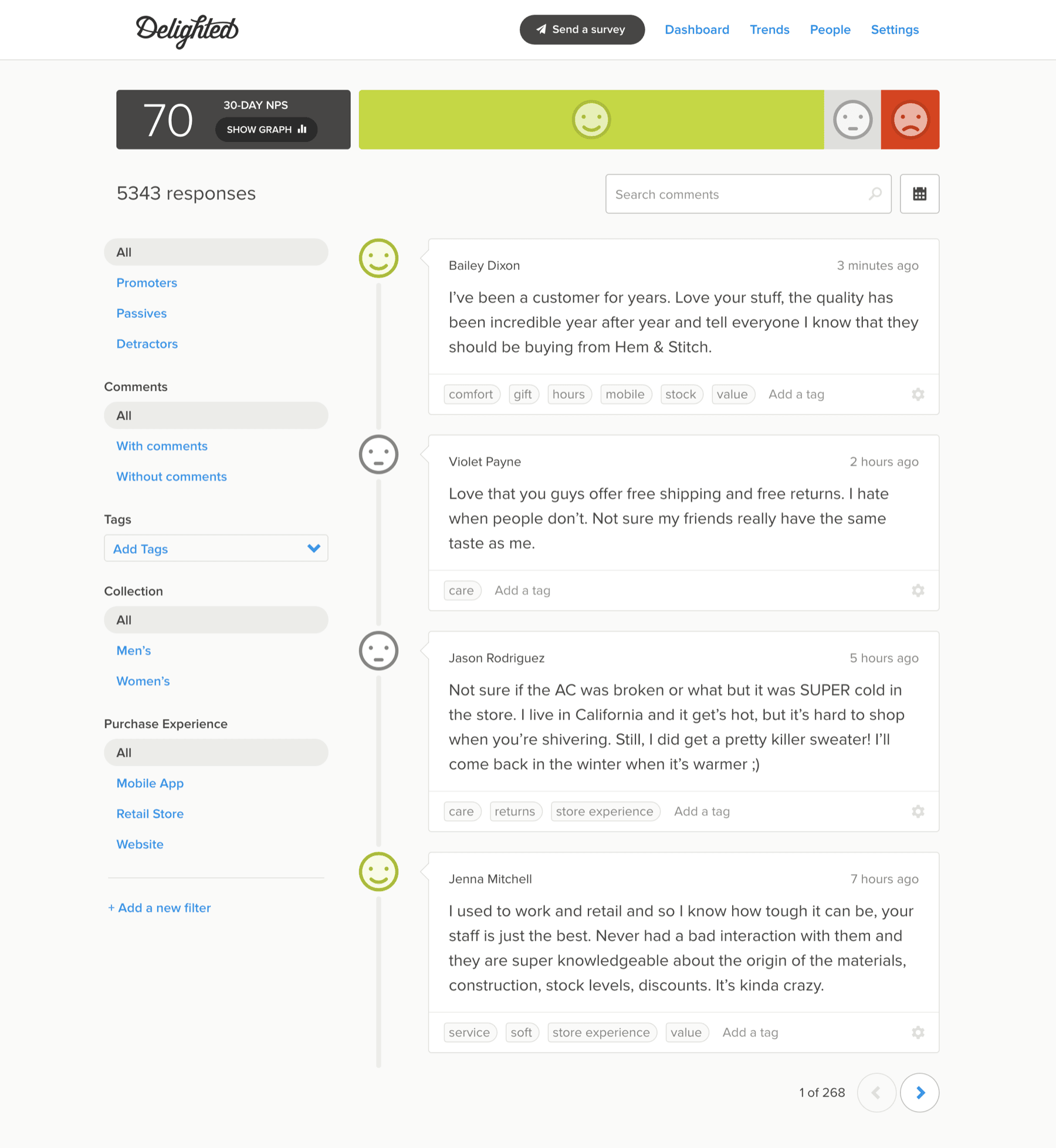
At Mixbook, customer feedback was painstakingly gathered through cumbersome one-off surveys and collected in spreadsheets, then distilled into a superficial handful of positive and negative comments for a Monday meeting. On the Mosaic team, direct customer feedback was the lifeblood of the product. It revealed needs clearly enough to shape our next product decisions.
The tools available at the time made that connection difficult. Surveys were long, deployment was manual, response rates were poor, and the questions often reflected what a company wanted to quantify rather than what a customer wanted to say.
My two co-founders and I started Delighted around a simple idea: make feedback dramatically easier to collect, make the experience good enough that people would answer, and deliver their words directly to people who could act.
Make starting almost effortless
A company with a logo and customer list could go from signup to getting feedback in roughly two to three minutes.
Protect the person answering
Every product decision had to work for the paying customer without exhausting or manipulating the person receiving the survey.
Preserve the useful signal
Standardized scores made feedback comparable, while the open response kept the customer's actual experience at the center.
Activation
From signup to feedback in minutes
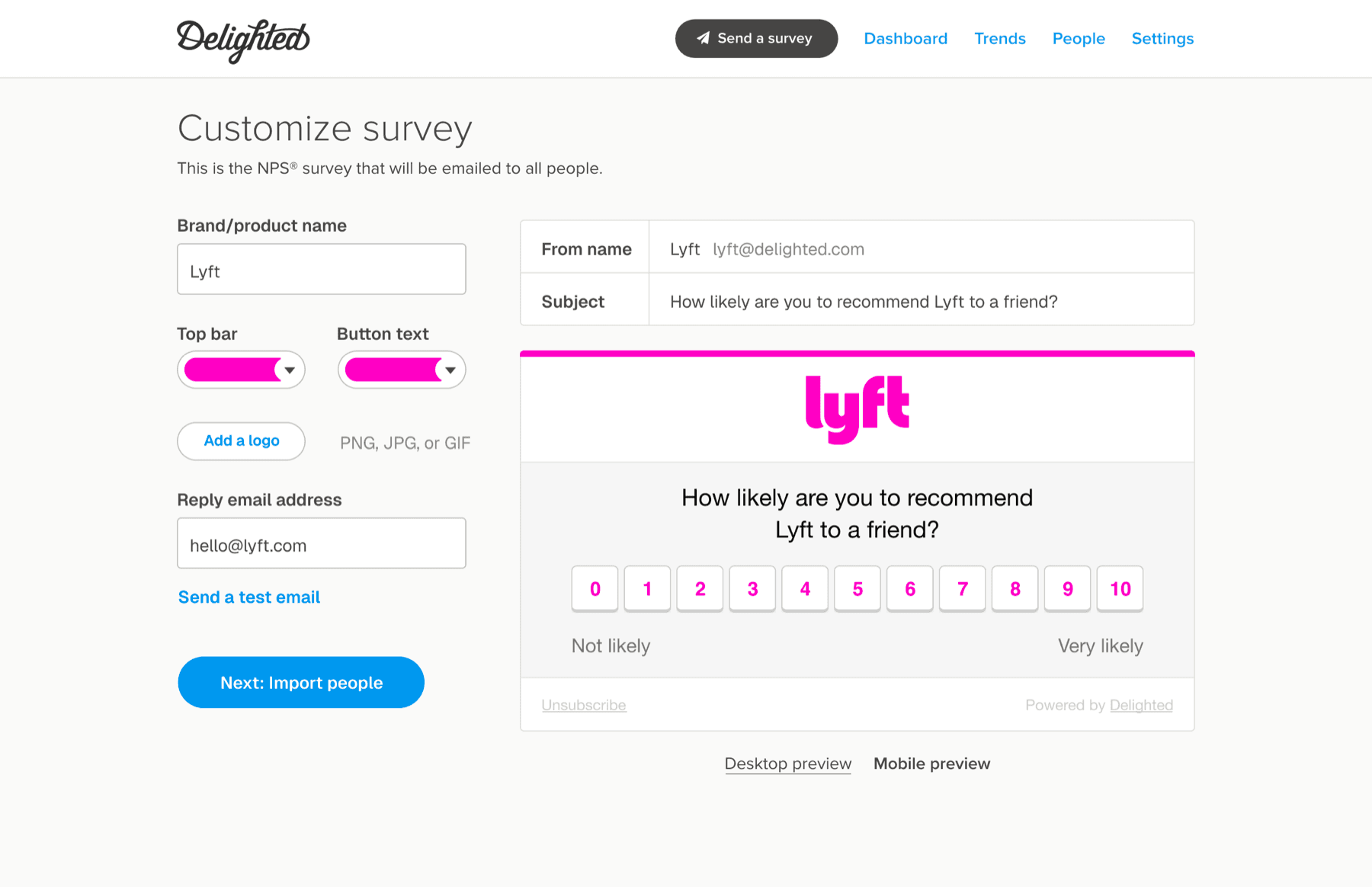
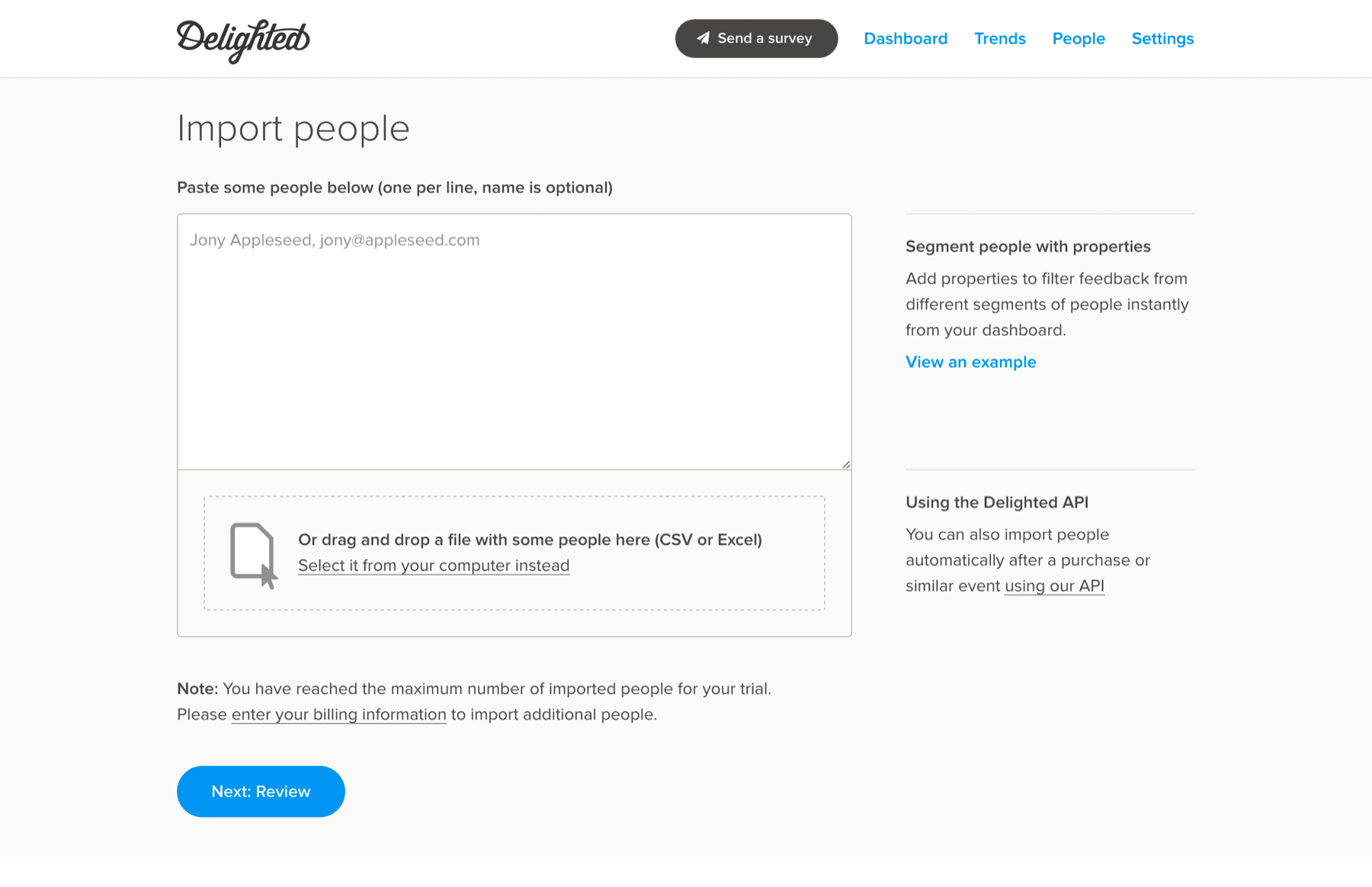
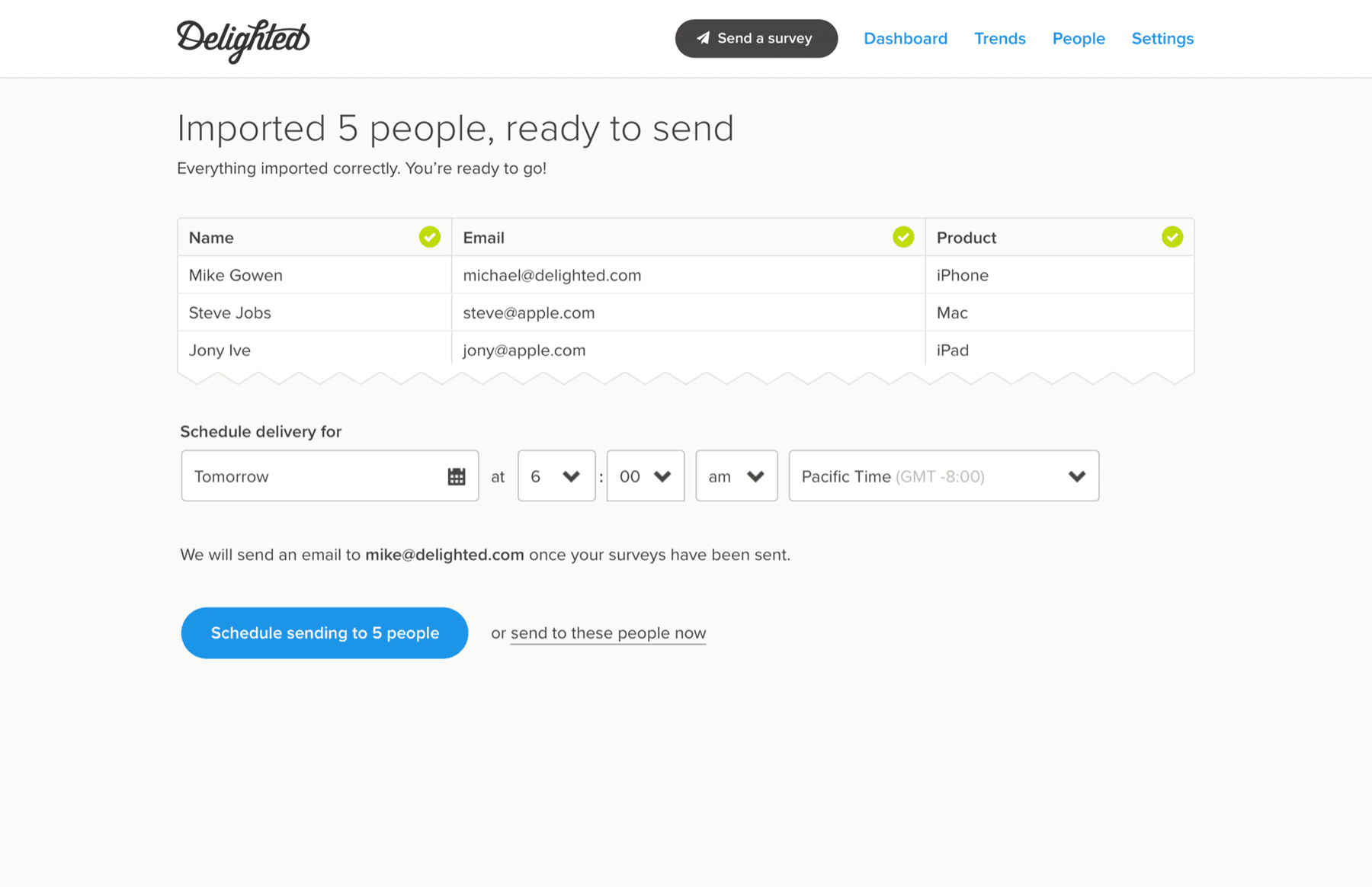
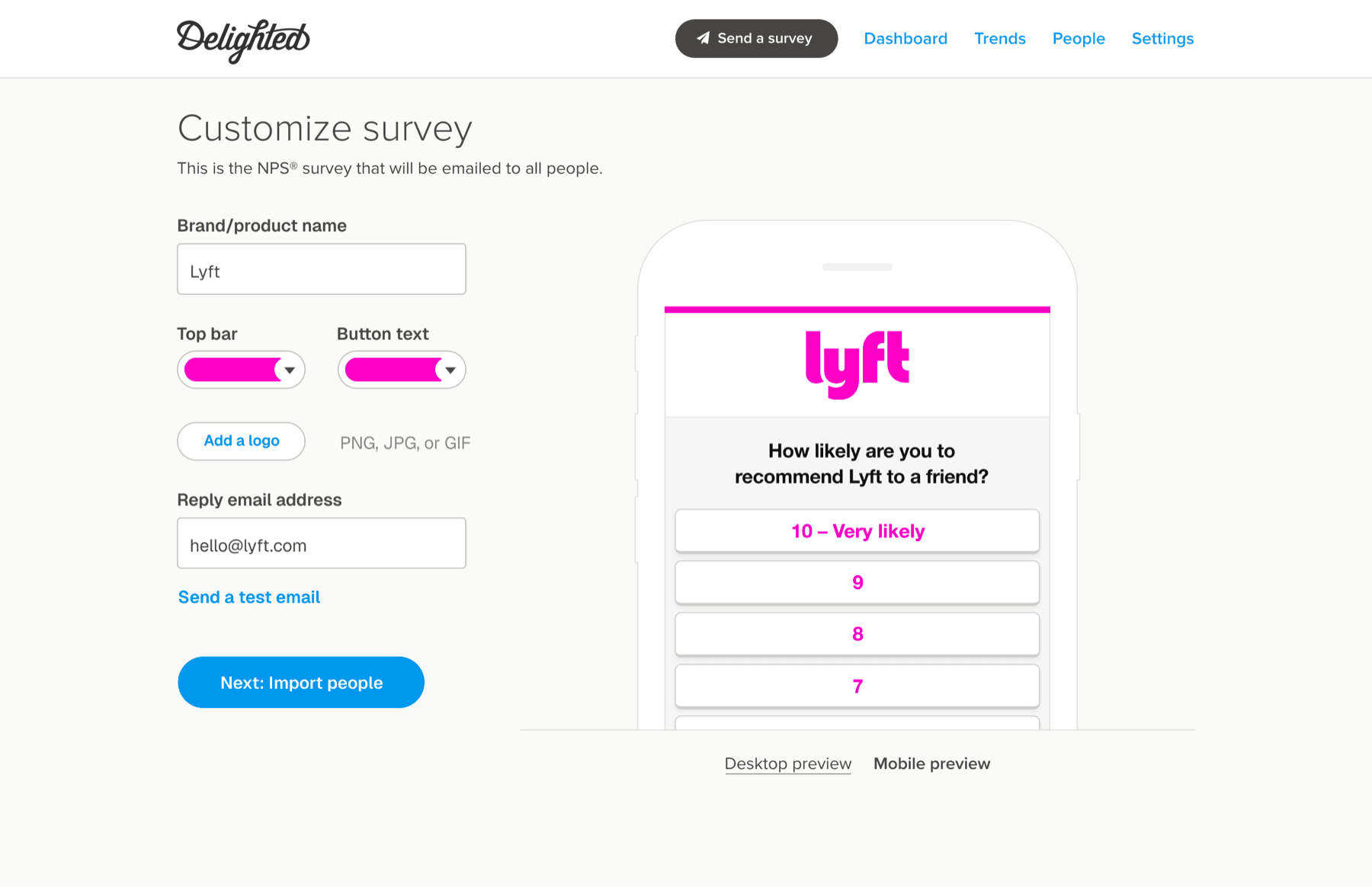
The initial flow asked for only what was necessary: make the survey recognizable, add the people who should receive it, verify the import, and send. Advanced paths remained available through properties, the API, and scheduled delivery without turning setup into a configuration project.
Customize the survey
Add the recipients
Review and send
Product judgment
Every survey had two customers, plus a channel to protect
The company paying for Delighted needed useful information. The person receiving a survey needed an experience that felt respectful and worth completing. As Delighted grew, we also had to protect the channel itself from fatigue and spam reports.
One of the most persistent requests was the ability to send reminders to people who had not responded. We declined for years. Reminders could increase a single survey's response count while making recipients less willing to answer future surveys. That was a poor trade for customers, their customers, and Delighted.
We also throttled each email address across surveys and organizations within an account so no person could be over-surveyed by accident.
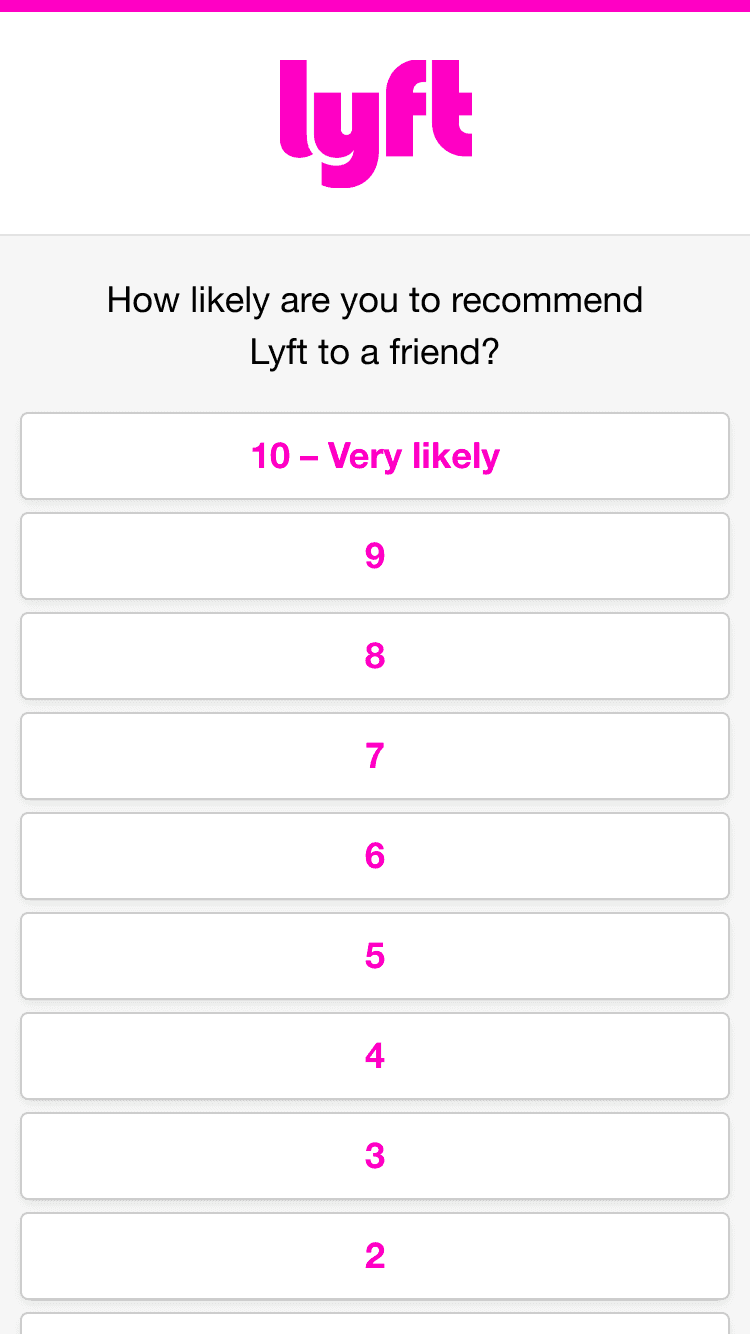
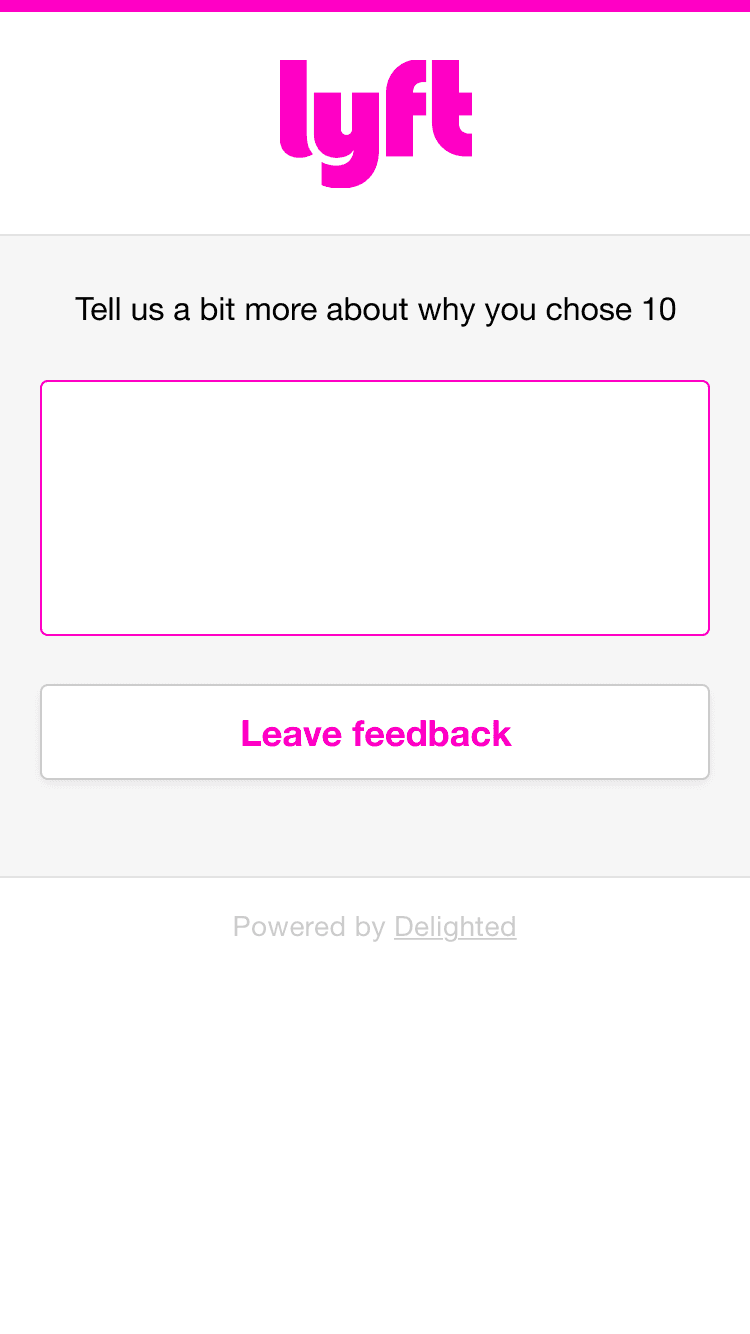
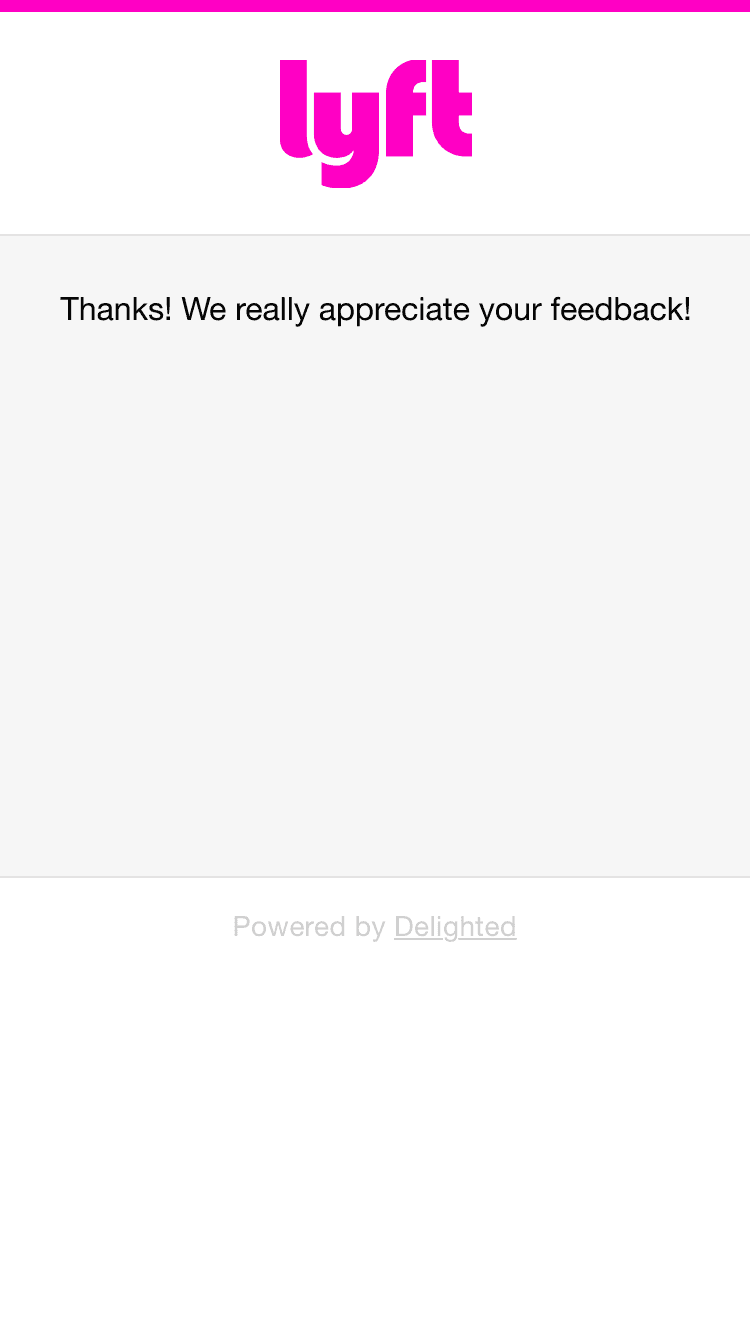
The recipient flow
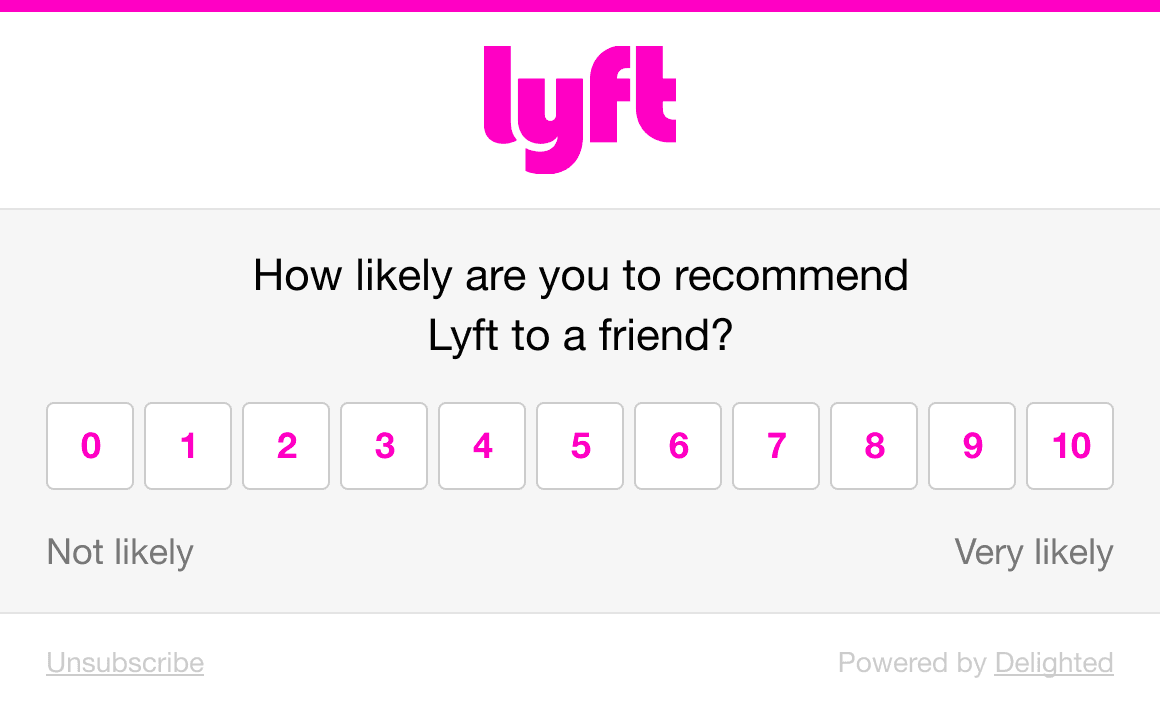
From score to explanation to completion, the experience stayed brief and focused.
Constraint
One more question, not a survey builder
As customers succeeded with Delighted, they naturally asked for more question types. A flexible survey creator would have been an easy expansion, but it also would have recreated the complicated products we were trying to replace.
Multiple-choice questions make it tempting to reduce customer experience to the answers a company has already imagined. We wanted teams to read what customers actually said.
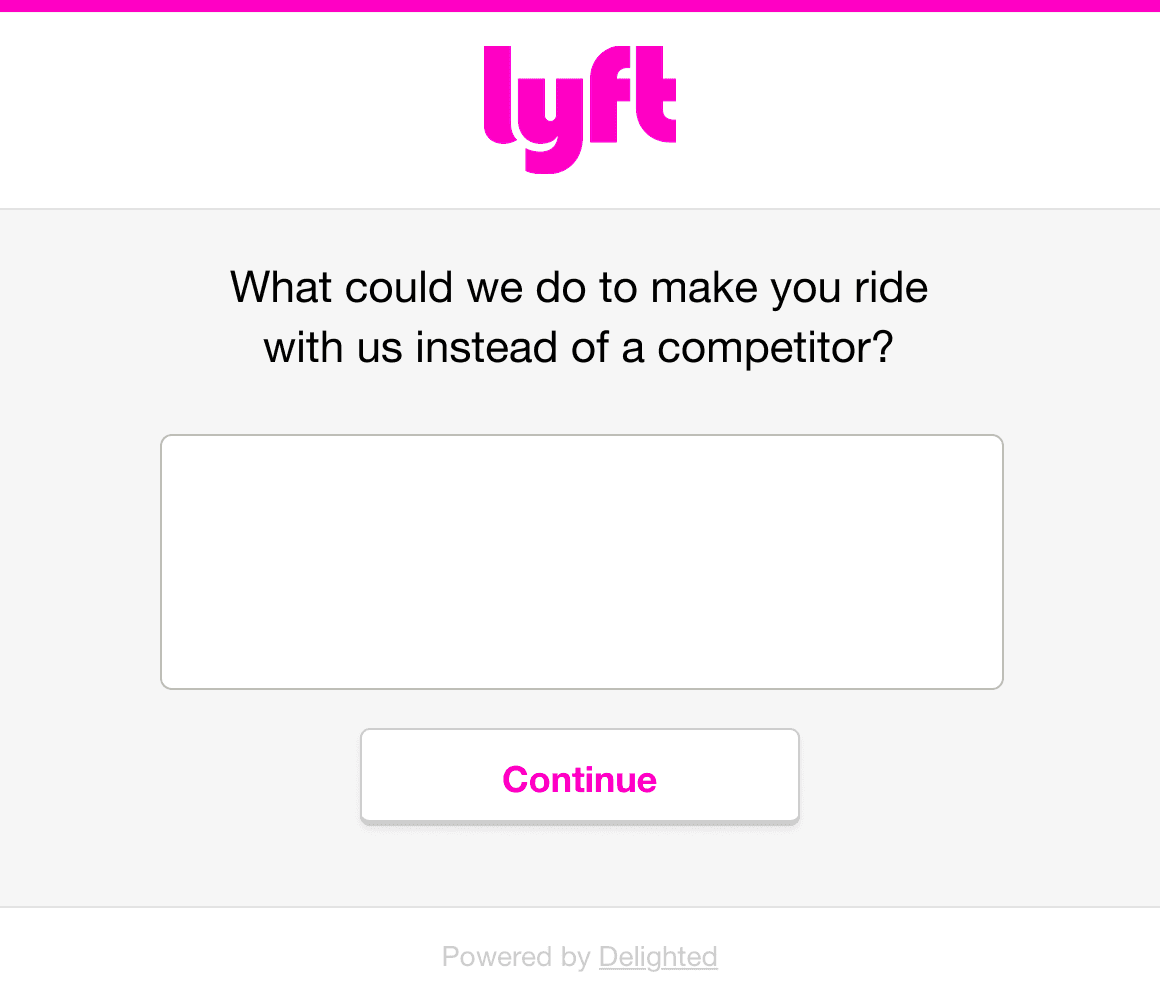
We eventually added exactly one optional follow-up question after the score and verbatim response. That small release satisfied much of the demand without changing the product's center of gravity. Later methodologies, including CSAT, had to serve the same original mission.
Progressive disclosure
Keep the default simple. Let complexity earn its place.
Larger customers regularly asked for legal language, embedding options, and more visual control. The underlying system supported far more variables than the primary interface exposed. We handled exceptional needs case by case, then watched to see which patterns repeated.
When a custom capability repeatedly proved useful, it could become a first-class product. Website visitor surveys followed that path. Other capabilities remained behind feature flags because making them public would have complicated the product for everyone else.
Operating system
Customer feedback shaped both the roadmap and the release process
The three founders jointly owned roadmap and feature priorities. We classified incoming feedback inside Delighted using tags and sentiment, which made repeated needs visible. Once we chose a problem, I explored several design directions, we selected an approach together, and then reduced it to the smallest useful release.
Find the pattern
Classify feedback and identify a repeated need worth solving.
Explore directions
Prototype and compare several approaches before choosing one.
Reduce to an MVP
Ship the smallest version because adding later is easier than taking away.
Work with requesters
Put the feature in a private alpha with trusted customers and iterate closely.
Earn broad release
Expand behind a feature flag, then make it public only if the value is broad enough.
Designing the company around the work
We had no product managers, formal researchers, or marketers. Customer support often acted as research, and several people in that function later moved into formal research roles.
Everyone was invited to critique the work. Customer feedback flowed into Slack, and engineers joined at kickoff so they understood the decisions behind a design instead of receiving it as a handoff.
I held final design authority. After hiring a designer for communication work, I gradually mentored him through increasingly complex product work. He became lead designer when I left the company.
Distribution
The recipient experience was also the growth strategy
Delighted did not grow primarily through conventional marketing. A small “Powered by Delighted” link appeared at the bottom of each survey. Someone would receive a thoughtful survey from a company they respected, click the attribution, create an account, and begin sending their own.
That loop meant recipient trust was not a secondary concern. The quality of the survey experience directly determined the quality of our acquisition channel.
A trusted survey
A respected company sends a Delighted survey.
A considerate experience
A customer can respond quickly, in their own words.
Discovery
They find Delighted through the attribution attached to every survey.
The loop repeats
They sign up and begin sending Delighted surveys.
Delighted in the wild
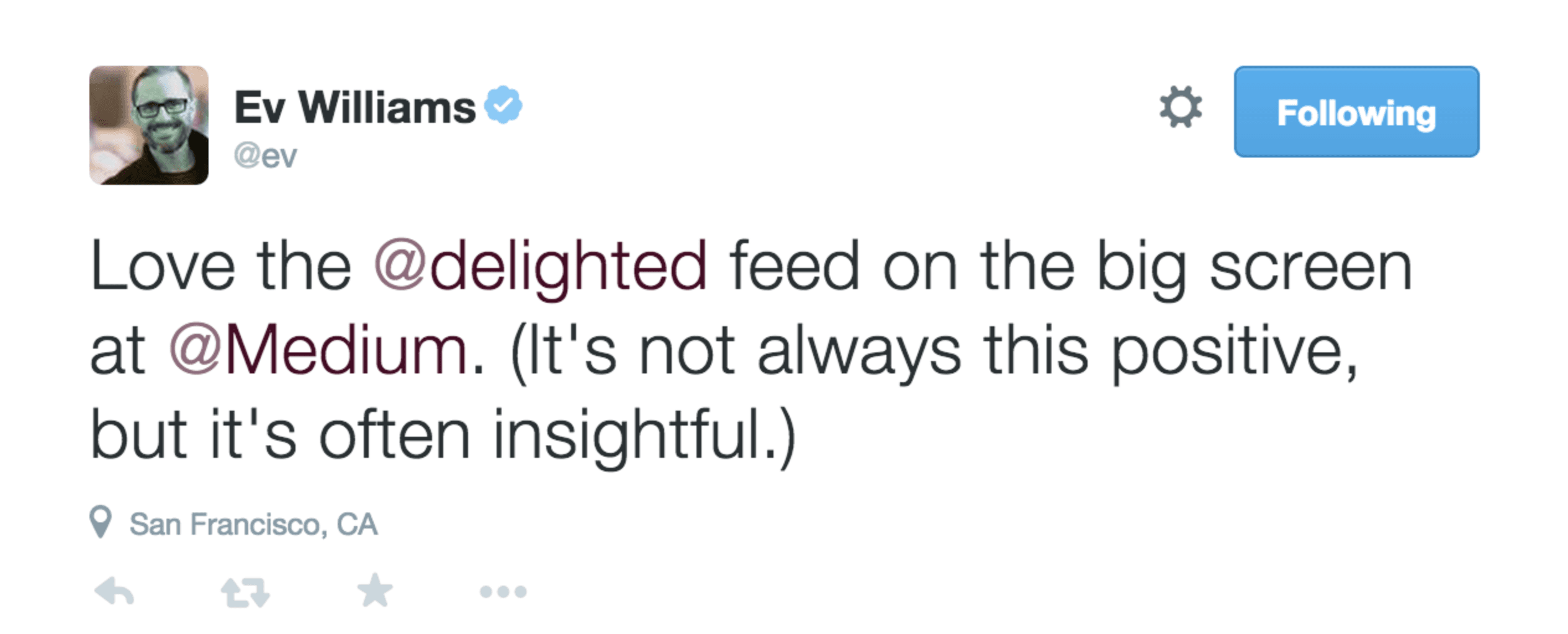
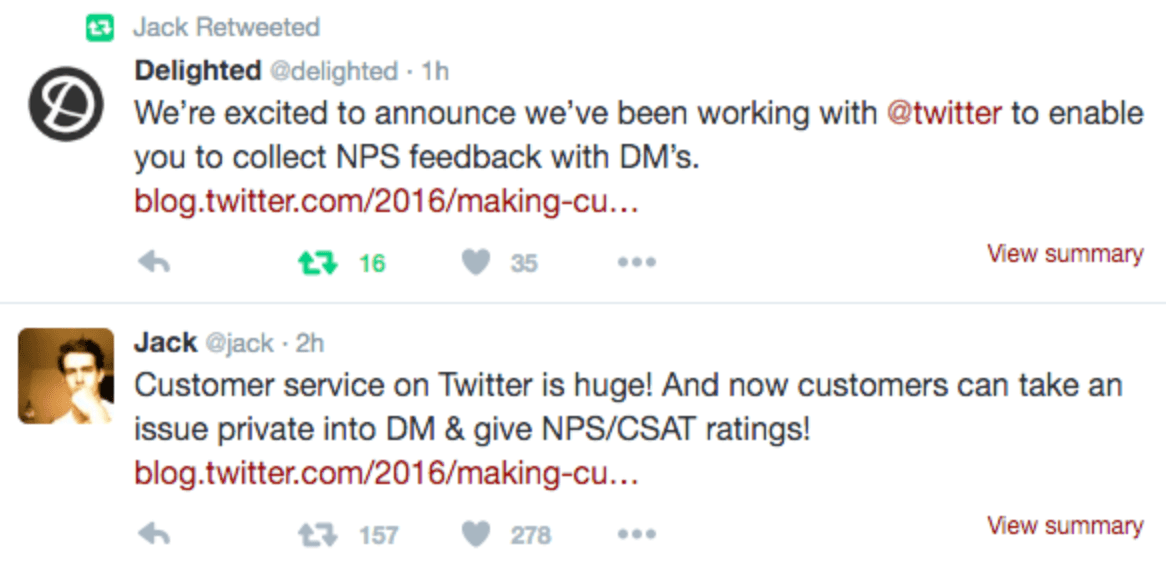
Medium displayed a live Delighted feed on a big screen for the team. A collaboration with Twitter brought NPS and CSAT feedback into direct messages.
Customer story
Showing the full loop with Bonobos
This customer case study followed Bonobos from the craft of making clothing to the moment a customer answered a Delighted survey and the team read that response. It made the abstract feedback loop tangible from both sides.
Videography: Jeremy Briggs · Directing and editing: Mike Gowen · Music: Tycho
Brand and community
The product's point of view extended beyond the interface
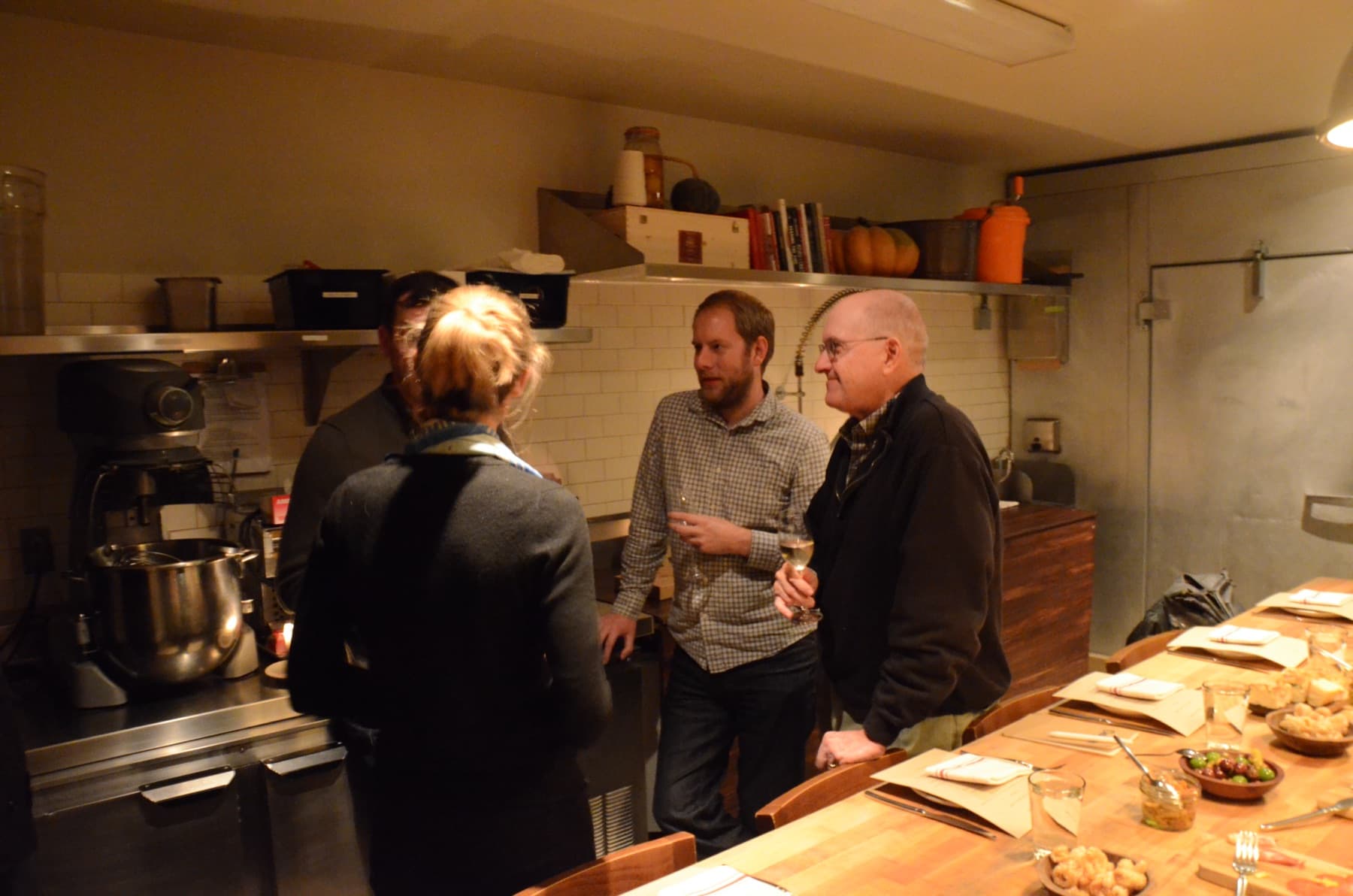
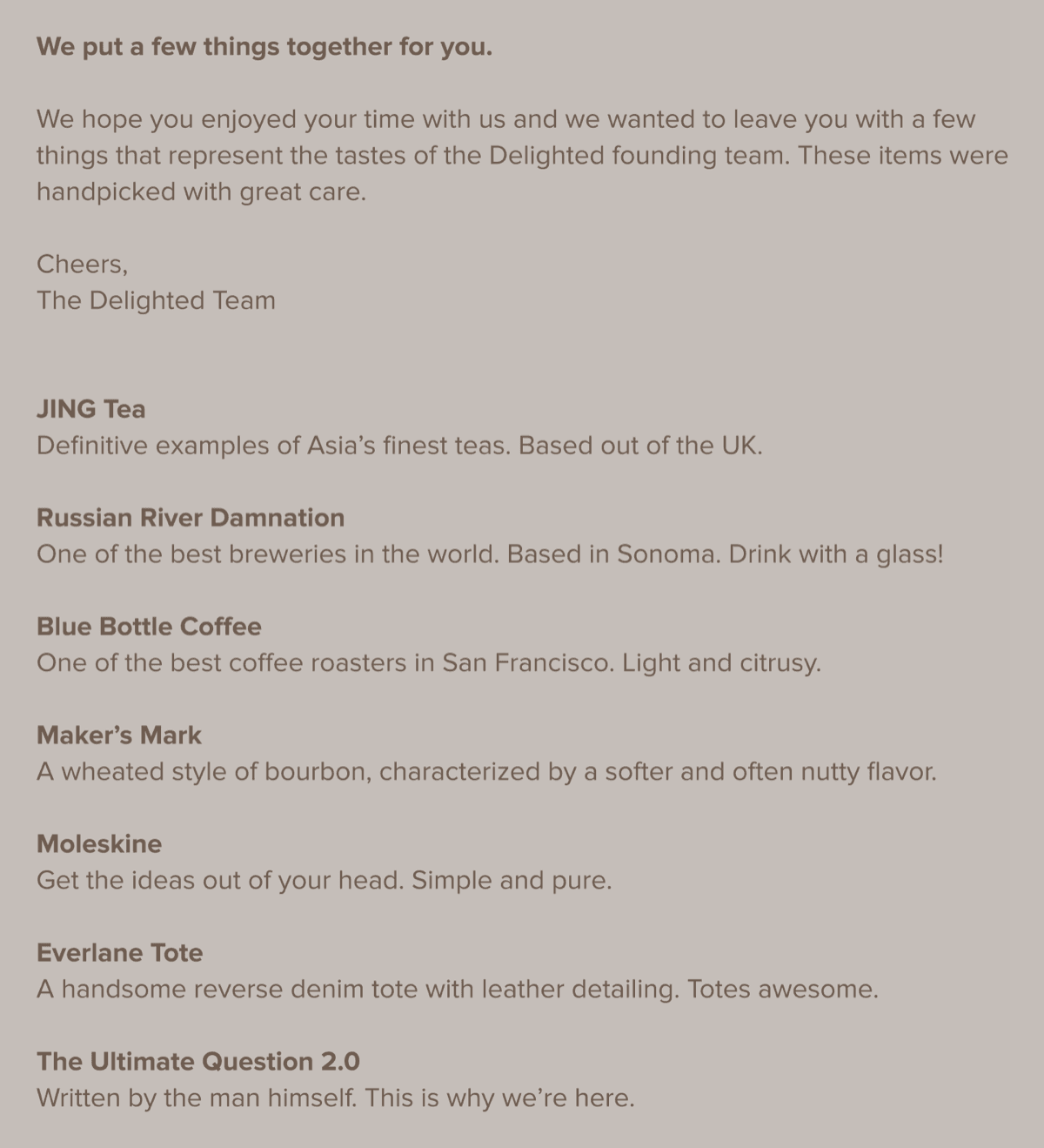
We hosted a customer-success dinner for existing customers with Fred Reichheld, creator of the Net Promoter System and a Bain Fellow at Bain & Company. The goal was simple: bring thoughtful customer leaders together to compare how they worked in practice.
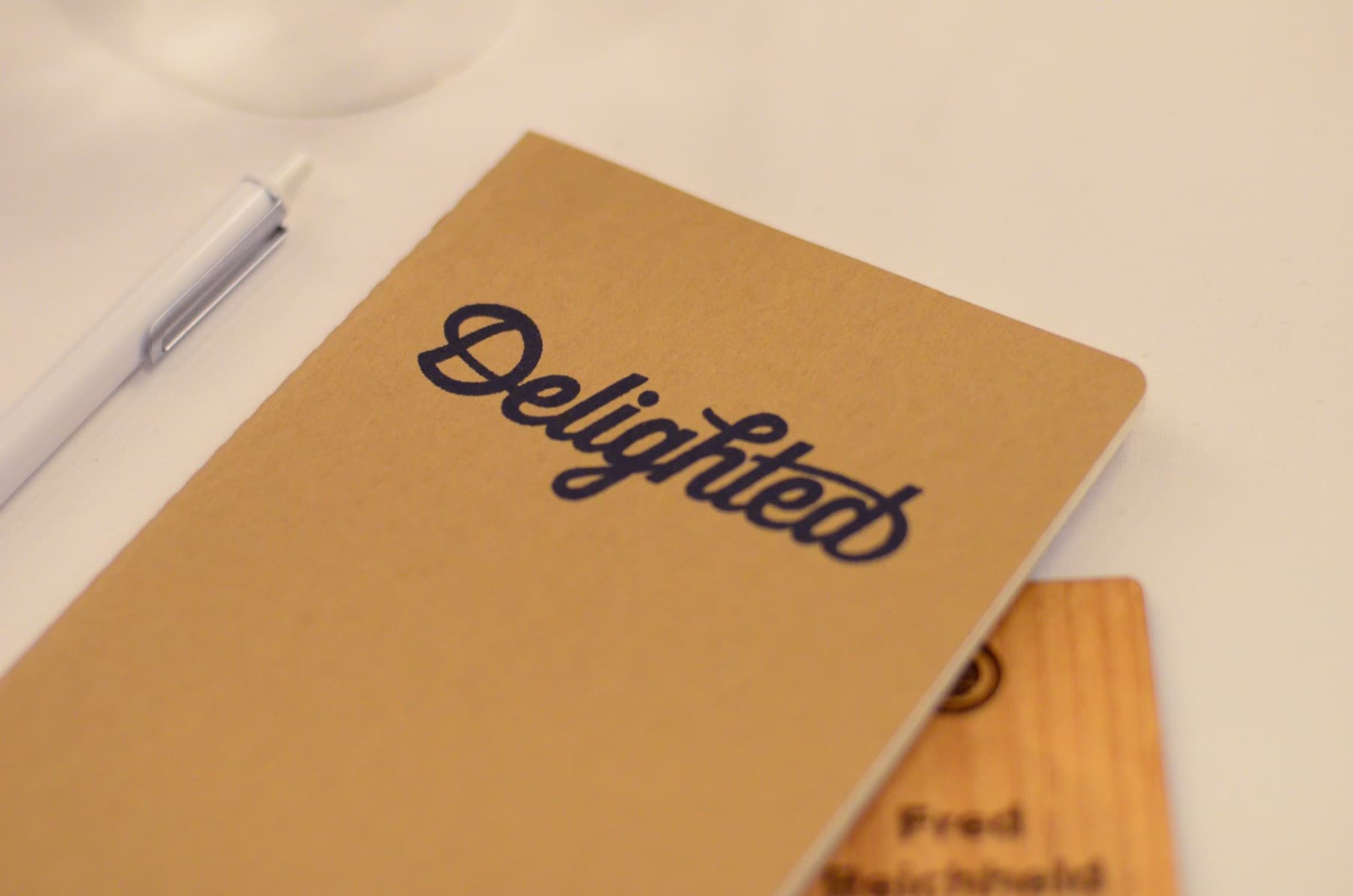
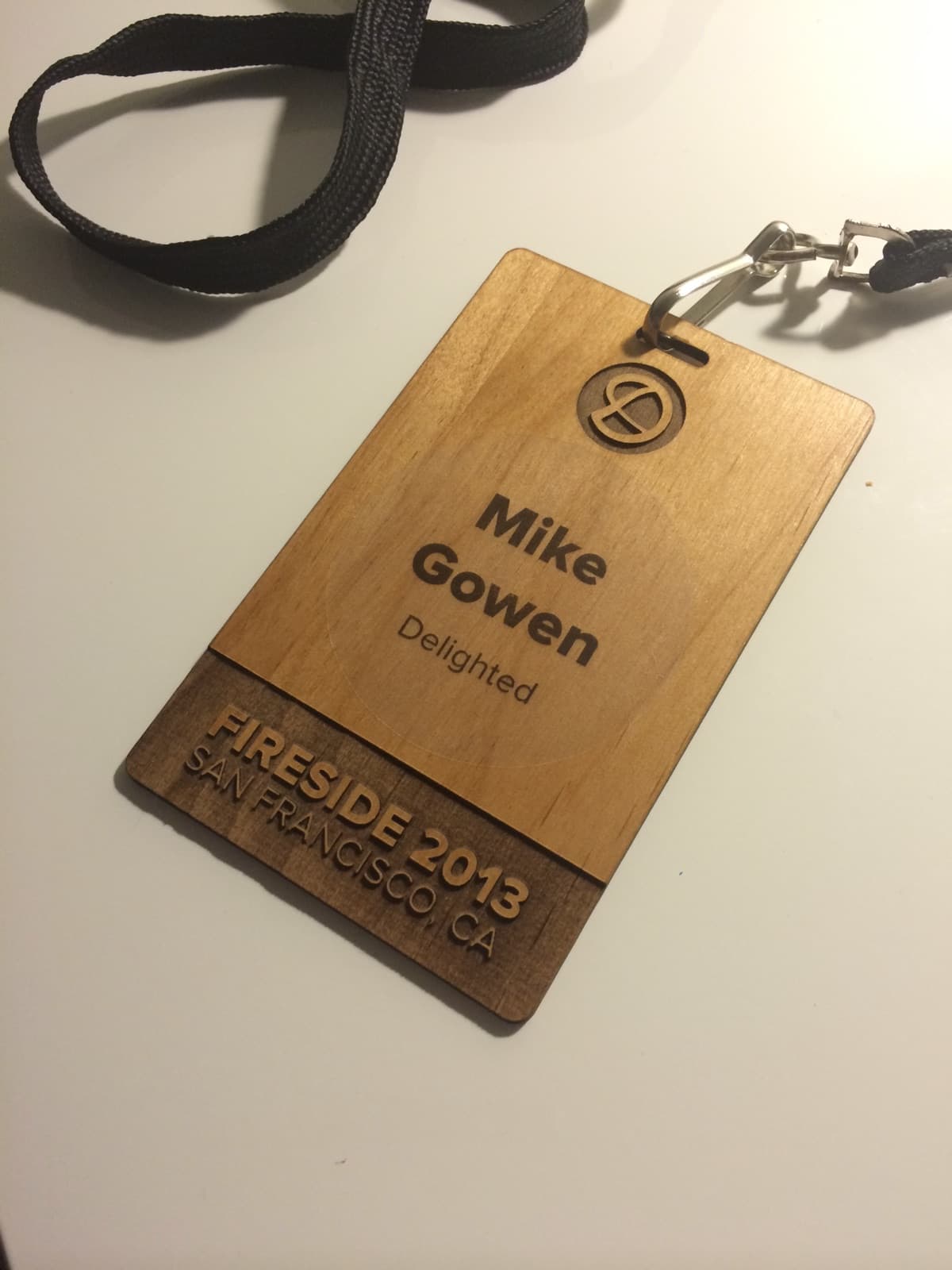
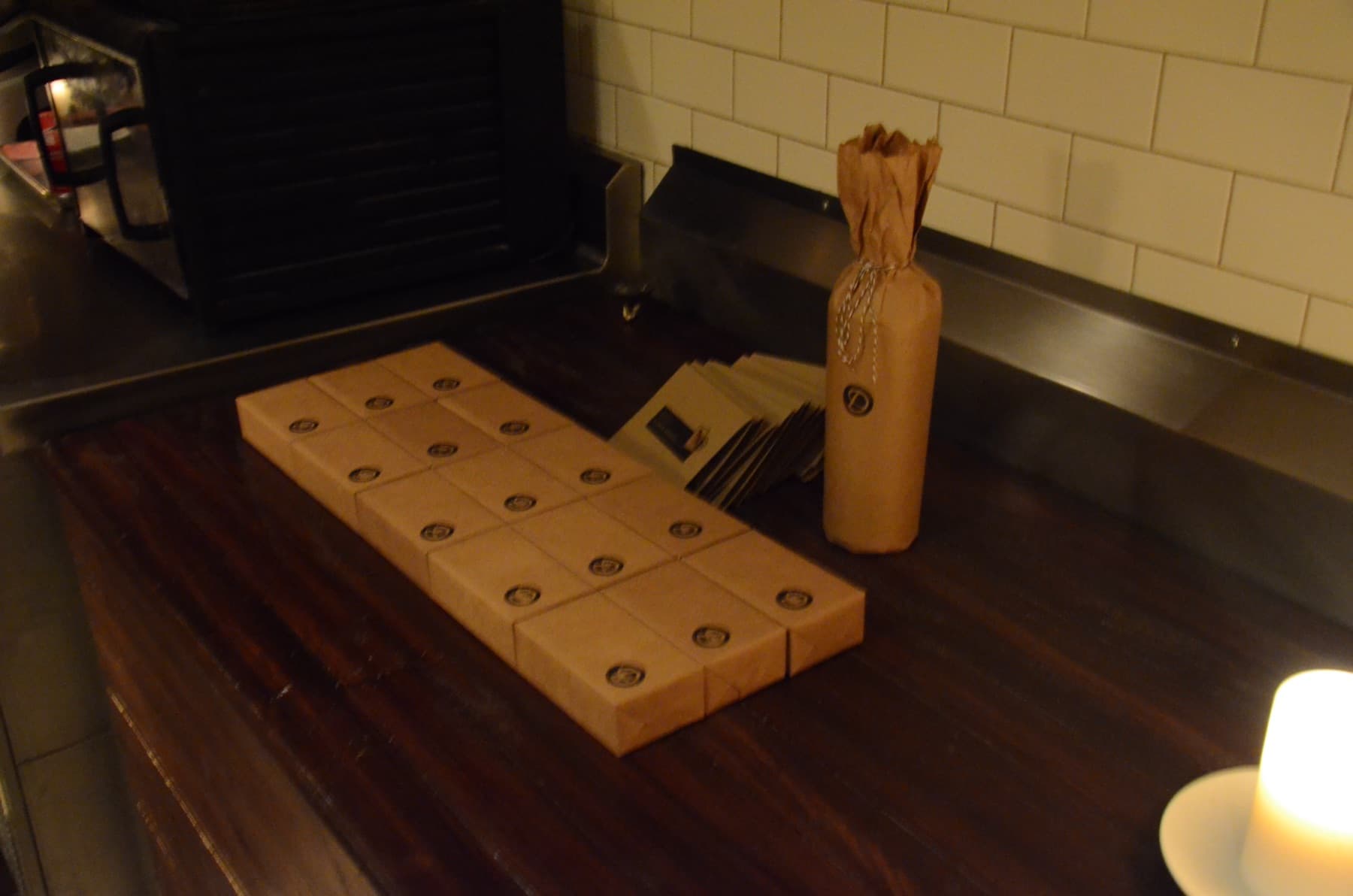
We also held a separate fireside chat. I designed every part of both experiences, from menus and printed collateral to notebooks, laser-cut badges, packaging, and the takeaways guests brought home.
Outcome
Growth without giving up the product
Delighted grew to millions in annual revenue, with millions of surveys sent and millions of responses collected. The team grew to roughly 20 to 30 people while remaining venture funded and reinvesting revenue back into the company.
Large enterprises sometimes offered significant contracts tied to bespoke work. We said no when those requirements would redirect the roadmap away from the self-service customers the product was built for, protecting the product even when a much larger contract was available.
Qualtrics acquired Delighted in 2018 because it served the self-service and startup market their enterprise product did not. Delighted continued operating independently, and I remained in the same role for another three years before leaving.
Customers and pilots included









Also included HotelTonight, Postmates, Staples, and TaskRabbit, among many other beloved brands we were proud to work with.

Delighted's simplicity was not the absence of hard decisions. It was the result of making them deliberately, over and over again.